
"64mm burr"
10000 article(s) found

Description of Flavor of High-quality Coffee beans in Colombian Coffee Variety producing area
The main varieties of Colombian coffee are small grains of coffee. Plants are small trees or large shrubs, 5-8 m tall, usually much branched at base; old branches gray-white, nodes dilated, young branches glabrous, compressed. Leaves thinly leathery, ovate-lanceolate or lanceolate, 6-14 cm long and 3.5-5 cm wide, tip long acuminate, acuminate part 10-15 mm long, base cuneate or slightly obtuse, rarely rounded, entire or

Why can't hand grinder be used in Italian coffee? what is the reason?
Why the hand grinder can't be used for espresso? but apart from the aesthetic experience gained by preparing coffee in this classic way, the biggest advantage of this method is that it can be ground to an extremely fine degree. If you like the way Turkish coffee is prepared, that is, pour hot water directly on ground coffee as fine as powder, a mortar and pestle may be your grinding.

Grinding scale of Colombian coffee beans introduction to the taste of manor with variety treatment method
The main varieties of Colombian coffee are small grains of coffee. Plants are small trees or large shrubs, 5-8 m tall, usually much branched at base; old branches gray-white, nodes dilated, young branches glabrous, compressed. Leaves thinly leathery, ovate-lanceolate or lanceolate, 6-14 cm long and 3.5-5 cm wide, tip long acuminate, acuminate part 10-15 mm long, base cuneate or slightly obtuse, rarely rounded, entire or

Brief introduction of Ramon Coffee Bean Flavor description Grinding scale area Manor in Colombia
Colombian Ramon Coffee Bean Flavor description Grinding scale region Manor brief introduction to Colombian coffee varieties are mainly small-grain coffee. Plants are small trees or large shrubs, 5-8 m tall, usually much branched at base; old branches gray-white, nodes dilated, young branches glabrous, compressed. Leaves thinly leathery, ovate-lanceolate or lanceolate, 6-14 cm long and 3.5-5 cm wide, tip long acuminate, acuminate
Flavor description of Columbia Linglong Coffee Bean introduction to Grinding scale treatment
The main varieties of Colombian coffee are small grains of coffee. Plants are small trees or large shrubs, 5-8 m tall, usually much branched at base; old branches gray-white, nodes dilated, young branches glabrous, compressed. Leaves thinly leathery, ovate-lanceolate or lanceolate, 6-14 cm long and 3.5-5 cm wide, tip long acuminate, acuminate part 10-15 mm long, base cuneate or slightly obtuse, rarely rounded, entire or

Coffee grading knowledge how to classify coffee grades
If the owners of two cafes are discussing, shopkeeper A says, "the coffee beans we use in our shop are NO.2 in Santos, Brazil. What about your store?" shopkeeper B said: our store uses Brazilian NO.1 of the same grade as Blue Mountain NO.1. The evaluation method adopted in Brazil is the deduction method, which is classified according to the number of defective beans per 300g of staple beans, with a total of seven grades from NO.2 to No.8, with a deduction of less than 4 points.

Does the grading of Kenyan raw beans determine the variety of coffee? Kenyan coffee has a strong taste and rich aroma.
Professional coffee knowledge exchange more coffee bean information please follow the coffee workshop (Wechat official account cafe_style) front street-Kenyan coffee introduction Kenyan coffee: strong rich acidity, rich taste and beautiful balance. Kenya AA is one of them. Most of the coffee growing environment in Kenya is above 1800-2100 above sea level, and it is cultivated and processed in the most reasonable way.

A brief introduction to the cultivation of nutty boutique coffee in Uganda, geographical location, climate and altitude
Beans are grown in Java, Sulawesi and New Guinea in Indonesia, and soybeans are also well washed in the IJEN highlands in eastern Java. Uganda coffee cultivation is one of the pillar industries of its exports. Uganda is the birthplace of Robsta in Africa, just as Ethiopia is the origin of Arabica coffee, and Robster coffee was first found in Uganda. So far, Uganda has more than

Coffee beans Basic knowledge Coffee classification
If there are two cafe owners in the discussion, A shop owner said: we use coffee beans in Brazil Santos NO.2, your shop? B shopkeeper said: We shop with the Blue Mountain NO.1 with the same level of Brazil NO.1. Brazil uses a point-deduction method to evaluate the quality of the beans. The beans are graded according to the number of defective beans in every 300 grams of main beans. The grades are divided into seven levels from NO.2 to NO.8. If the points are less than 4,

Kenya AB Carlo Star Bakkenya and Sumatra Kenyan Coffee theme
Professional coffee knowledge exchange more coffee bean information please follow the coffee workshop (Wechat official account cafe_style) Kenya coffee grading system (official, washed beans) E (elephant beans): here the "E" stands for "Elephant", that is, "elephant", but it is not the elephant bean species in the coffee bean breed, it is a kind of abnormal development, the two seeds are intertwined with each other, forming "looks like one".

Introduction of Coffee Flavor and taste varieties in Santa Rita Manor, Colombia
One: it is said to come from the sea island of the Caribbean and from El Salvador in Central America. Second: in 1808, a priest introduced coffee beans to Colombia for the first time from the French Antilles via Venezuela. One of them is that Colombia's first coffee seeds were imported from Venezuela through the province of Santander. [1] third: the earliest coffee cultivation in Colombia

[practical information] how are coffee beans screened and graded?
Communication of professional baristas Please pay attention to the grading of coffee in the coffee workshop (Wechat official account cafe_style). If the owners of two cafes are discussing, owner A says: the coffee beans we use in our shop are NO.2 in Santos, Brazil. Where is your shop? B the shopkeeper said: our store uses Brazilian NO.1 of the same level as Blue Mountain NO.1. The evaluation method adopted in Brazil is the deduction method, according to every 300 grams.

Description of Colombian Coffee Flavor with moderate acidity introduction to the treatment of Grinding degree of varieties
No matter in terms of yield or texture, Colombian coffee is first produced by Medellin, which is characterized by full granules, rich nutrition, moderate acidity, good balance, rich aroma and soft taste. In addition to Medellin, the provincial capitals of two neighboring provinces in the south, Armenia and Manizales, are also famous coffee producers
The quality of coffee production in Kenya is low? The government plans to revitalize coffee growers through coffee futures
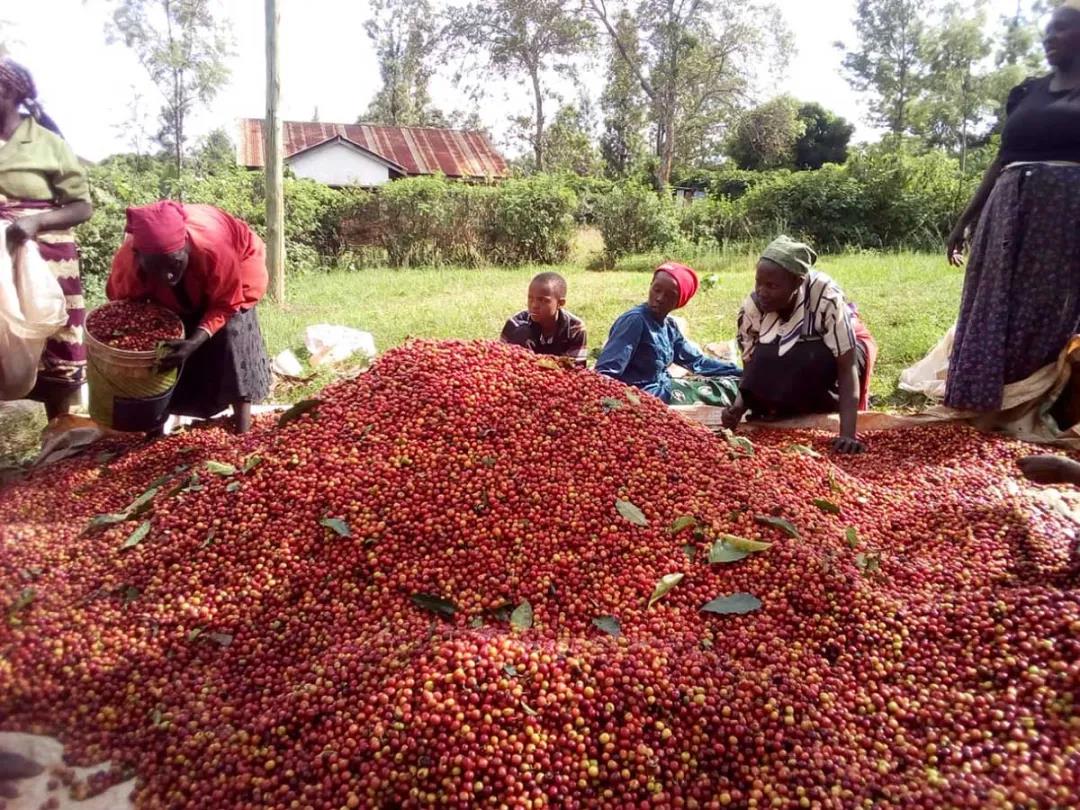
Professional coffee knowledge exchange more coffee bean information Please pay attention to the impact of climate change in coffee workshops (Wechat official account cafe_style) and the serious governance strategies of coffee cooperatives in Kenya are affecting the performance of the coffee industry in Kenya, and COVID-19 is undermining the performance of the country's coffee export market. According to the data of the United States Department of Agriculture (USDA), since coffee is mainly used in 2020,

Pride of Venice-mazzer bean grinder instruction manual mazzer bean grinder how to adjust thickness
For more information about coffee, please refer to Coffee Workshop (official Wechat account cafe_style) brand | Mazzer bean grinder is classified | name of professional bean grinder | SUPER JOLLY inch | 195 (W) x 263 (deep) x 600 (high) mm voltage | 220V 60Hz rate | 350W speed | 1600 r.p.m weight | 14 kg face
Planting conditions of coffee trees in Yunnan where can I plant coffee trees in China? is Yunnan coffee good?
The basis of coffee planting technology-where coffee trees can be planted in China, such as sunlight, rainfall, soil, altitude, temperature, as well as the way coffee beans are harvested and the production process, will affect the quality of coffee itself. Under the premise of ensuring a temperature of about 20 degrees, the higher the altitude or the closest to the Tropic of Cancer, the stronger the unique flavor of coffee. Very different kinds of coffee. Coffee trees are mainly

El Salvador Finca El Aguila Eagle Manor introduction El Salvador Coffee introduction
Professional coffee knowledge exchange more coffee bean information please follow the coffee workshop (Wechat official account cafe_style) Eagle Manor (Finca El Aguila), which is currently run by Mauricio Ariz, the Ariz family has run a coffee farm for four generations, which is located in Cantn Ojo de Agua, belonging to Chalchuapa District, Santa Ana Province. The whole manor has 64 hectares of plantable land.

Na Linglong-soft and translucent from Colombia how to make Columbia Linglong Coffee by hand
Professional coffee knowledge exchange more coffee bean information Please pay attention to the coffee workshop (Wechat official account cafe_style) German imports account for 25% of Colombia's total exports, which also reflects the country's excellent quality. Coffee is divided into top grade (Supremo), excellent grade (Excelso) and top grade (UGQ, Unusual Good Quality), excellent grade.

Characteristics of Jinchu Valley in Kenya
Kenya Coffee Grade Kenya is a well-known producer based on the size of coffee beans. It is usually divided into nine grades, according to the bean type, there are PB (round beans, accounting for about 10% of the total output), in addition, there are E (elephant beans), AA, AB, C, T, TT, MH, ML according to size. The best coffee grade is bean-shaped berry coffee PB, followed by AA++, AA+, AA, AB and so on.

Brief introduction of Grinding scale in Variety producing area of Columbia Nana Linglong Coffee Flavor description treatment method
Columbia Linglong Coffee Flavor description method A brief introduction to the Grinding scale in the producing area of Colombian Coffee is mainly small-grain coffee. Plants are small trees or large shrubs, 5-8 m tall, usually much branched at base; old branches gray-white, nodes dilated, young branches glabrous, compressed. Leaves thinly leathery, ovate-lanceolate or lanceolate, 6-14 cm long, 3.5-5 cm wide, tip long acuminate